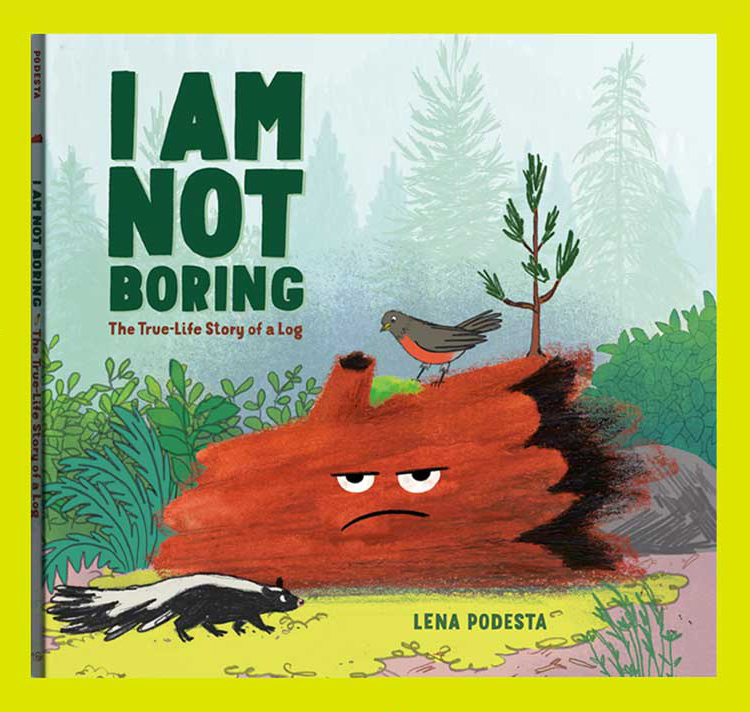
Inspired Interview
My smart, talented, and all around amazing friend, Jen Harrington interviewed me for her blog, Inspired Writing. Aside from being an accomplished screenwriter and director, she writes about all things movies, screenwriting, and creativity, and has some really inspiring interviews with creative people about their process. It was such a pleasure to be interviewed by her and I just love her so much. Here is the interview below, but you can also read it on her substack and definitely take a look at her other articles. I highly recommend checking out her blog if you are at all interested in movies, screenwriting, or the creative process. You’ll see what I mean. Here is the interview:
How People Create: Lena Podesta
Or, Finding Yourself In Your Mistakes As An Artist
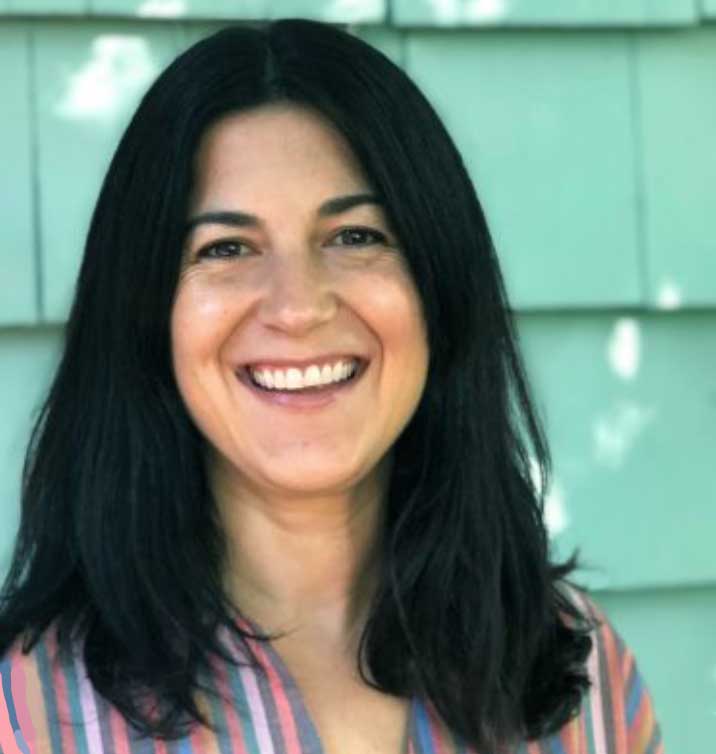
Author/illustrator/animator Lena Podesta is not only an incredibly gifted artist, she also happens to be my very good friend and former roommate.
I mention this only because knowing her so well, I think my perspective on her and her work might be worth carrying with you as you read her fascinating responses in our interview.
First thing you should know:
Lena = summer. I wrote about it in an earlier post here. Specifically what I said is this:
…‘summer’ reminds me of Lena because no one does it better. ‘Summer’ is night swimming in pools that aren’t our own, picnicking on the front lawn, playing truth or dare. Staying up all night just to solve the mystery of what the breakfast at the bar down the street is like. (Answer: the smell of spilled beer and vomit while you’re trying to eat your eggs is not appetizing.)
This feeling, call it freedom, call it youth, call it summer, it’s easy. It’s simple. I can define it in a million ways but what it is doesn’t change. This is what I imagine writing should feel like. Easy, simple, the instinct is clear, the idea is strong, the words come naturally and with no unnecessary adornment.
You will feel this when you look at her work. There is an ease, a simple joy in her drawing that always shines through.
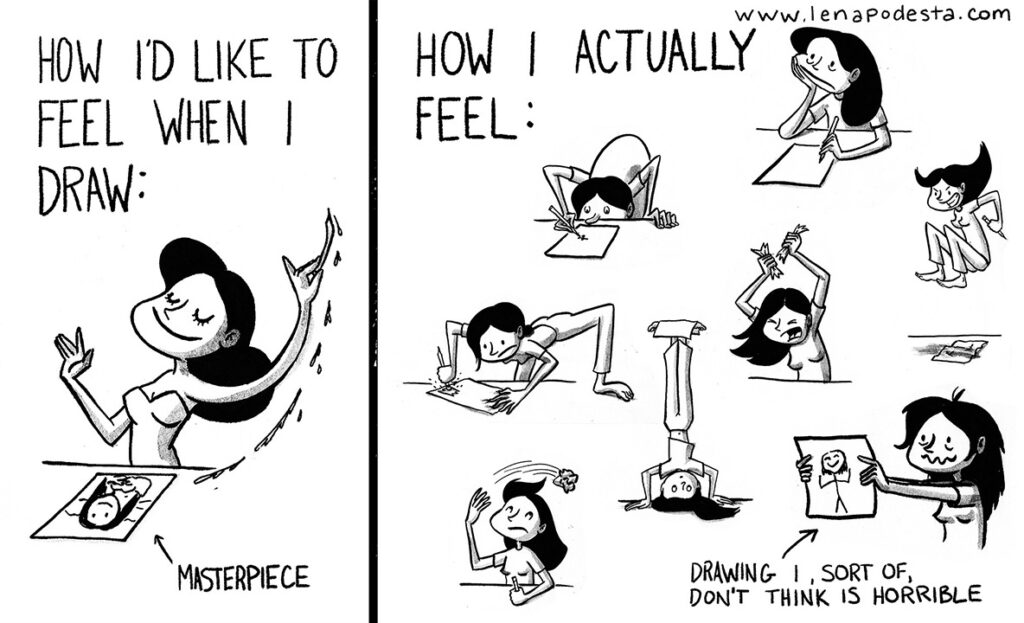
Second, is that the freedom in her work, I feel, comes from the boldness of someone who is unafraid of making mistakes. As she mentions below, she knows that for artists, mistakes don’t just bring ‘happy accidents’ they bring… us. They are the thing that makes something undeniably ‘yours’.
Something I need to remember more often.
And, with that, may I introduce: Lena Podesta.
Can you briefly describe your creative journey as an illustrator/animator/children’s book author up until this point?
I’ve always just loved drawing. It’s my happy place, where I can just sort of go into my head and create whatever I want. I would say, second to that, I loved reading a lot as a kid. I used to get in trouble for inviting friends over and then ignoring them to read a book. In college, I took an animation class, and a light bulb went off. It was like, I can bring my drawings to life and I can use them to tell stories?! I felt like a mad scientist. I was hooked. And animation turned out to be a way I could make a living drawing all day.
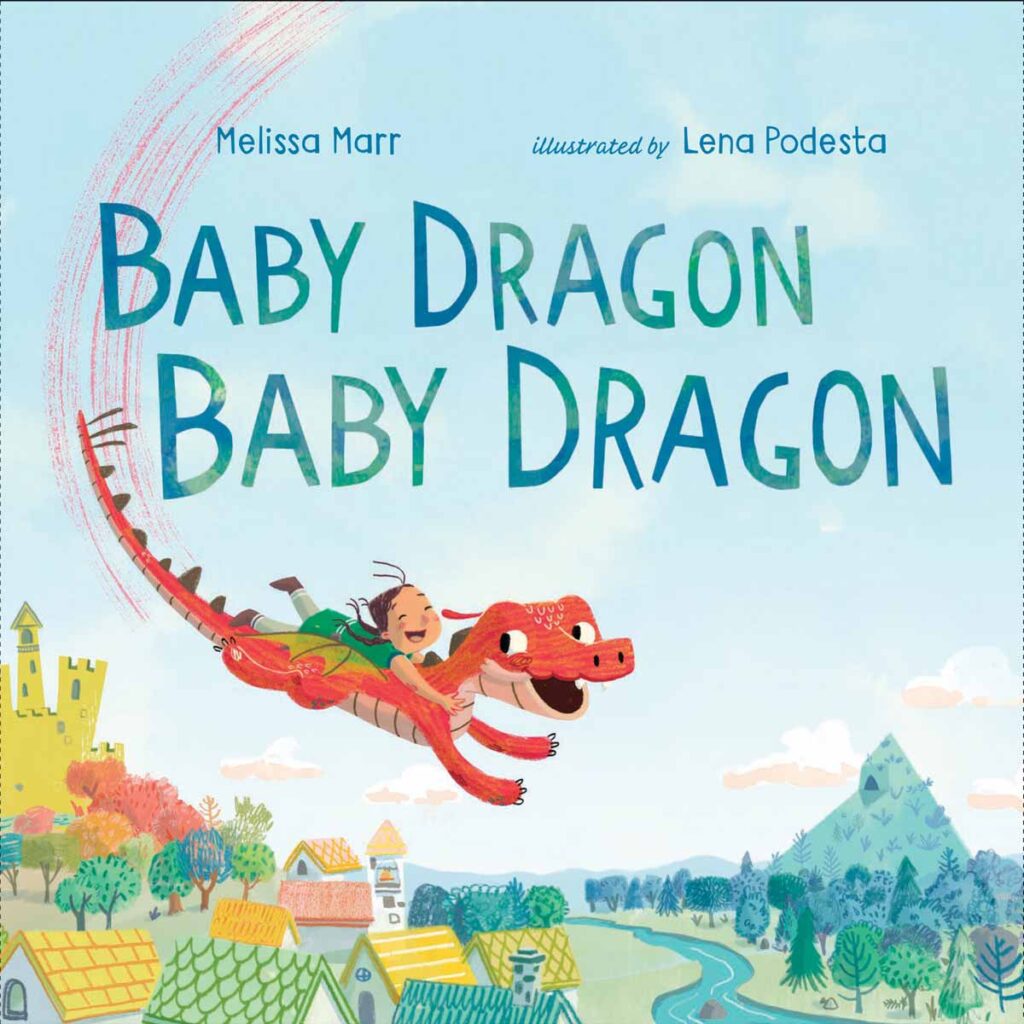
When my first kid was born, my creative time became severely compressed. I was forced to reevaluate what I really wanted to do. Turned out, I wanted to draw and tell my own stories. Picture books are this really beautiful medium… you aren’t constrained as much by traditional narrative and the pictures are just as important as the words. So, after work, and after the kids went to bed, I started working on picture books. It’s something that I do creatively for myself, but also with my kids.
Where do you tend to draw your inspiration from (i.e. personal life, fantasy, politics, etc)?
I pull ideas from everywhere… random things that pop into my head that I think would be funny to see, weird things my kids say or wonder, memories or feelings from childhood, imagining different perspectives. I like to ask the question “what if” a lot and see where that takes me. Like “what if that dress flew off that clothes line? Where would it go and what kind of adventure might it have?” I think that’s one of the most magical thing about kids- they are more free to follow thoughts laterally, diagonally, whichever direction their brains take them.
Walk us through the process you go through from getting inspired to writing and illustrating a children’s book. (i.e. brainstorming, outlining, notecards, background, sketches, multiple drafts, etc)
Getting Inspired is actually my favorite part of the creative process.
The trick for me is to write down as many ideas as I can. Usually it’s just a sentence or a phrase or something I think would be funny to draw. The more I write down, the more inspiration seems to come my way. It’s like the ideas just want to be noticed. But the thoughts that I keep turning around in my head are the ones that slowly get made into picture books. And when I say slowly, I mean sloooowwwwlllly… like years. I had the idea for my first picture book, Too Crowded, in 2012 when my oldest kid was 2.
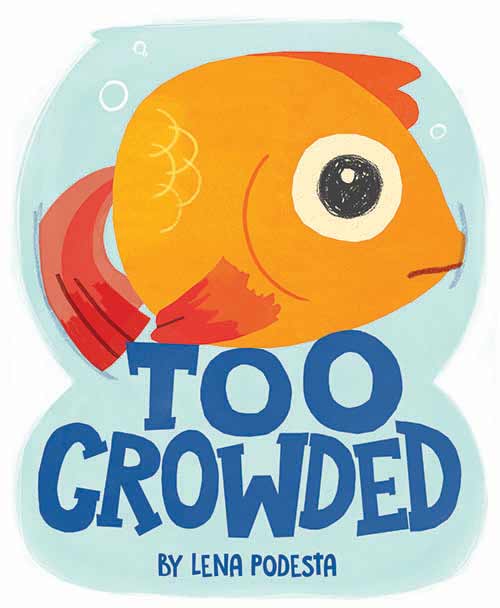
We got them a pet fish and thought it would be cool to get the fish a friend to keep them company, but the friends kept dying. The idea that popped into my head from these tradgedies was how fun it would be to draw a fishbowl that was crammed with all different kinds of animals. I turned that idea around for 8 years, drew many sketches of fish and animals in fishbowls, wrote around 20 drafts, and eventually turned it into a very different picture book from my initial idea.
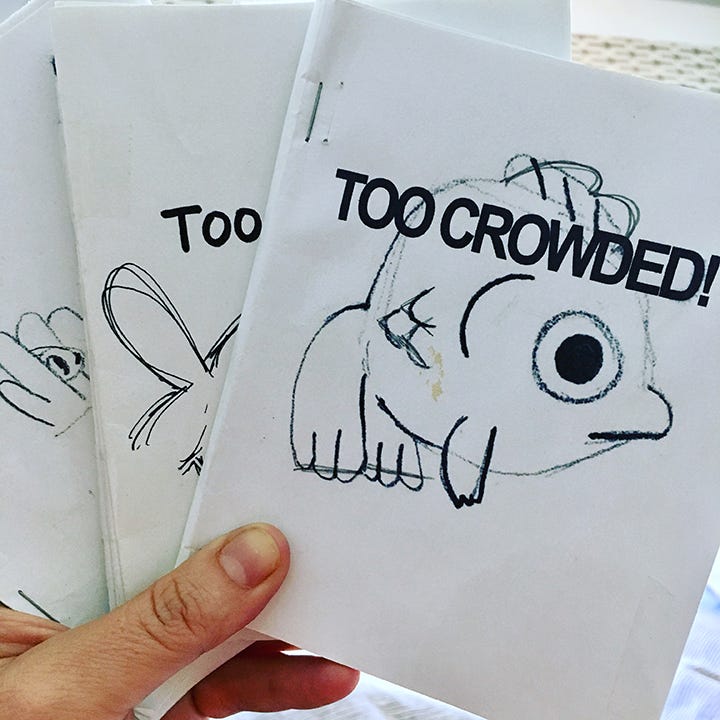
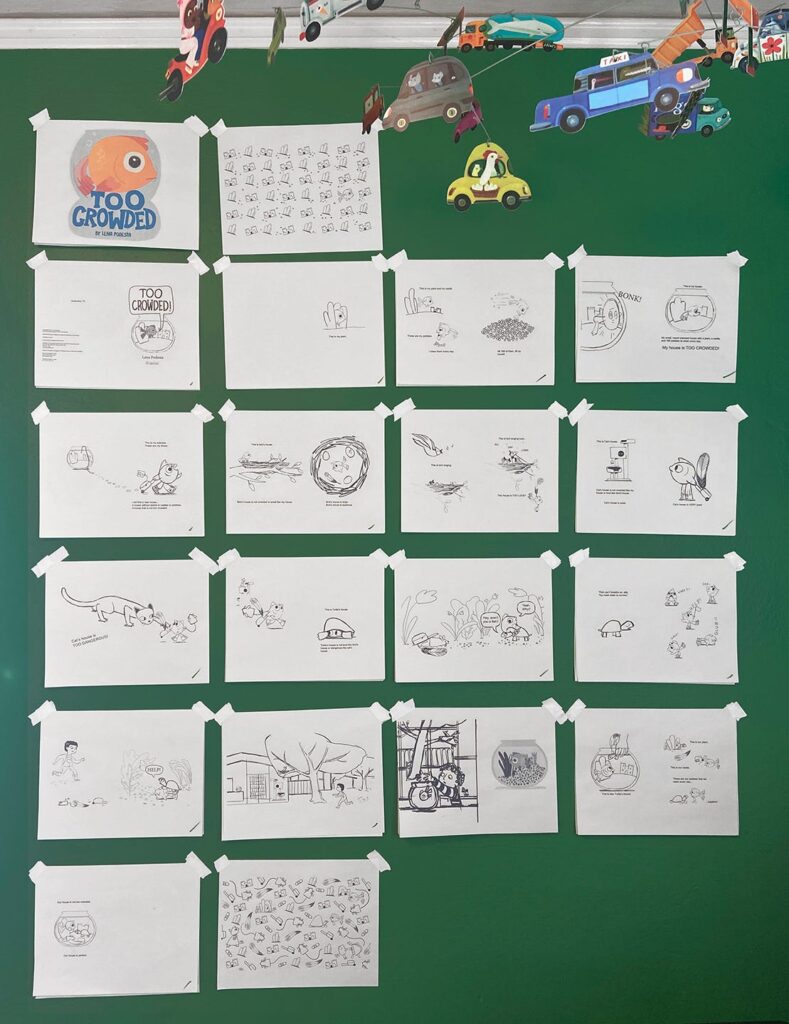
One thing I always do when I’m working the story out for a book is to draw little thumbnail sketches like a storyboard on small peices of paper or notecards. Then I put all the pages on the wall of my studio so I can see them all together. I sit with them like that for a while and work on other things. Periodically I rearrange them, write or sketch on them as inspiration hits for ways to improve the story. I’ve learned to look out for a feeling, like a right feeling, to tell me when to stop messing with it.
Separately, walk us through the process for something you might do for your job at The Simpsons.
Right now I’m doing character layout for The Simpsons. It’s sort of like a mix between being an artist and an actor and it’s way more technical than the illustration or picture book work that I do.
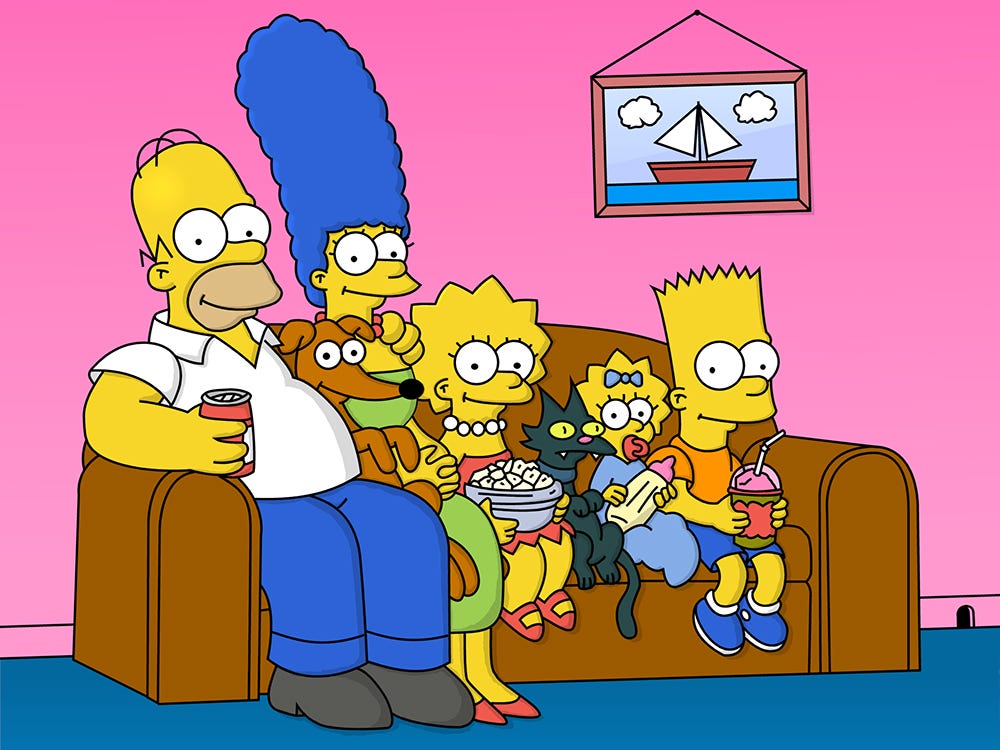
I get a storyreel and an audio track and my job is to draw the characters acting out the scene. So I have a really strong jumping off pioint. The writers have already written and revised the script and the storyboard artist has thought about the best way to tell that story and I have a director giving me further information about how they think the character should act. But everything is in service of the story… how to tell it in the clearest, and often funniest, way. Some things that I’m constantly thinking about while I work are: Is the acting convincing? Is it funny or how could it convey the goal of the scene better? Is my character on model, and the right size and angle for the scene? Have I drawn the character in strong, readable sillhouettes? It’s important to be super clear because each scene only has a few seconds on screen to convey its goal.
How do you approach revisions once you have a finished piece? Do you get feedback from others, put it away and come back with new perspective, just trust your gut, etc?
I need to take a break from a piece before I can see what it needs to improve. I get hyper-focused and can’t zoom out again to see what it needs until I step away… sometimes for as long as a week. Getting feedback from others is also really helpful. I get feedback regularly (sometimes unsolicited, but always appreciated) from my husband, kids, family, and friends. I also work really closely with my agent on revisions and getting an idea ready to pitch. I’ve gotten much better at trusting my gut to tell me when something is ready. It’s more like listening for the absence of a feeling. When something isn’t ready yet, it just doesn’t feel quite right, but when it is ready, that feeling isn’t there. I used to trick myself out of listening to that feeling when I really wanted to be done, but I’m getting better at listening to myself… thank you therapy?
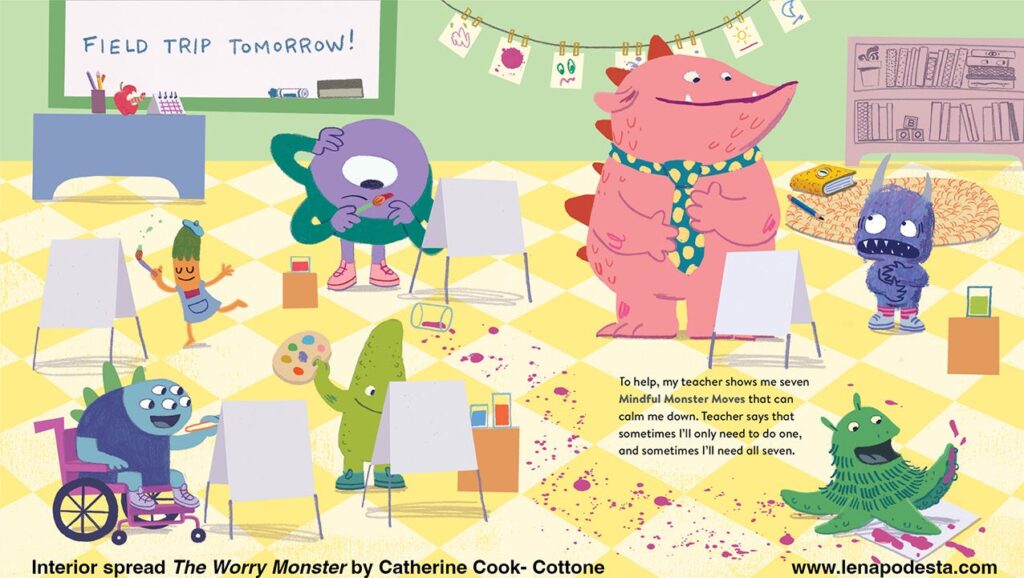
How did you find your style/voice as an artist and how has that voice changed/evolved over the years?
I’ve always drawn what I like and I’ve always liked drawing people and animals. I think as a young person I just wanted to be “good” at drawing and learned by copying other artists and studying books and drawing from photos and magazines a lot. I also play around a lot with different mediums: paint, collage, ceramics, sculpting with felt, crochet, photography. I think I’m too ADD to totally stick with one thing and my style is still evolving. The most important thing that I’ve learned about style is that at the crux of style are your imperfections.
Your “mistakes” are what make you unique. If you want to find your style, seek out and embrace those imperfections.
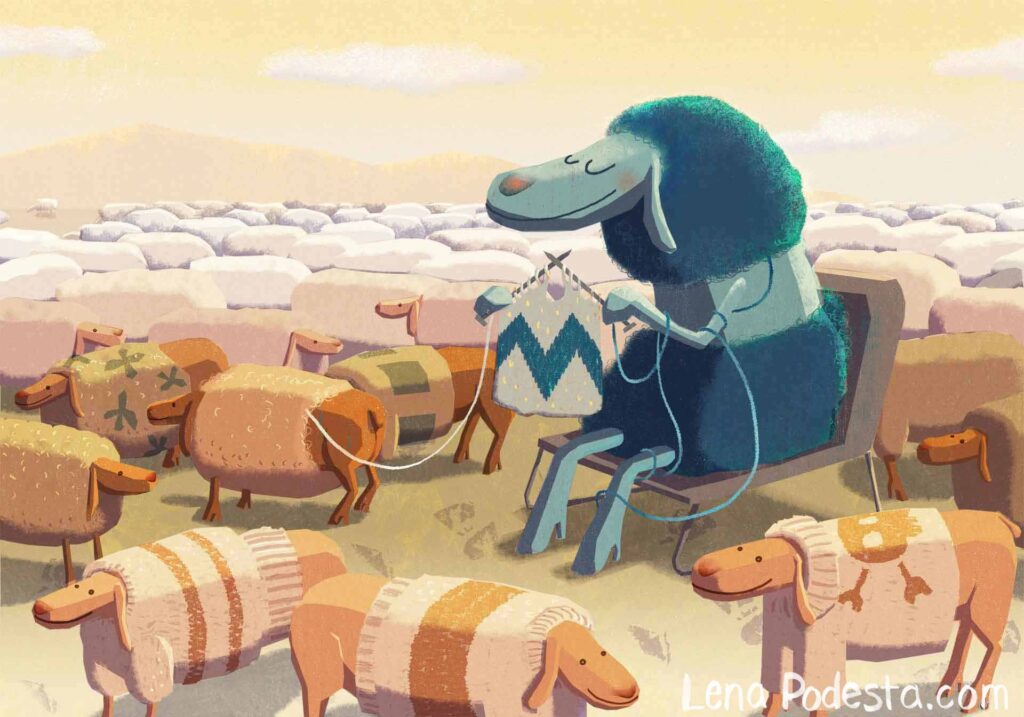
Are there things you do when you’re feeling stuck or uninspired? (i.e. go to the movies, take a walk, be in nature, etc)
Walking does it for me almost every time… or a shower. I read about this set of cards that Brian Eno and Peter Schmidt made for song writing called “oblique strategies.” The idea is that when you get stuck, you pull a card and it helps you get out of your regular head and tackle the problem from a totally different perspective. I made my own set, based off of theirs, but specific to children’s books. They say things like “secondary character is now the main character”, “mash it with a fairytale”, “Combine 2 ideas”, “Throw in something completely weird”…
Describe your last typical drawing session (day of week, time of day, how long, where, what did you do before, did you listen to music, etc.)
I walk my dog every morning, first thing. If I get any good ideas on my walk, I jot them down as soon as I get home or stop on my walk and take a note on my phone. Then I make myself a second cup of coffee and get to work. It helps me to have a list of what I want to accomplish that day so I don’t get distracted. I’m obsessed with lists.
Are there any tips or methods you have learned as an illustrator over the years that you think could be useful to others? (i.e. slow down, vomit draft, writing out of order, etc)
The biggest challenge for me is getting out of my own head. When I’m worried about the finished product, I make crap! The things that help me the most are things that make it impossible to be “perfect.” Like ditching the eraser. If I make a mark that looks wrong, instead of erasing it, I practice figuring out how to incorporate it and keep going. I keep an ugly journal. I use my journal to work out ideas instead of trying to make it pretty or “good.” I guess my journal is my version of a vomit draft and it’s filled with ugly drawings and half-baked ideas.
Anything else about your process that you’d like to add? (i.e. your favorite color? special ink? magic spells?)
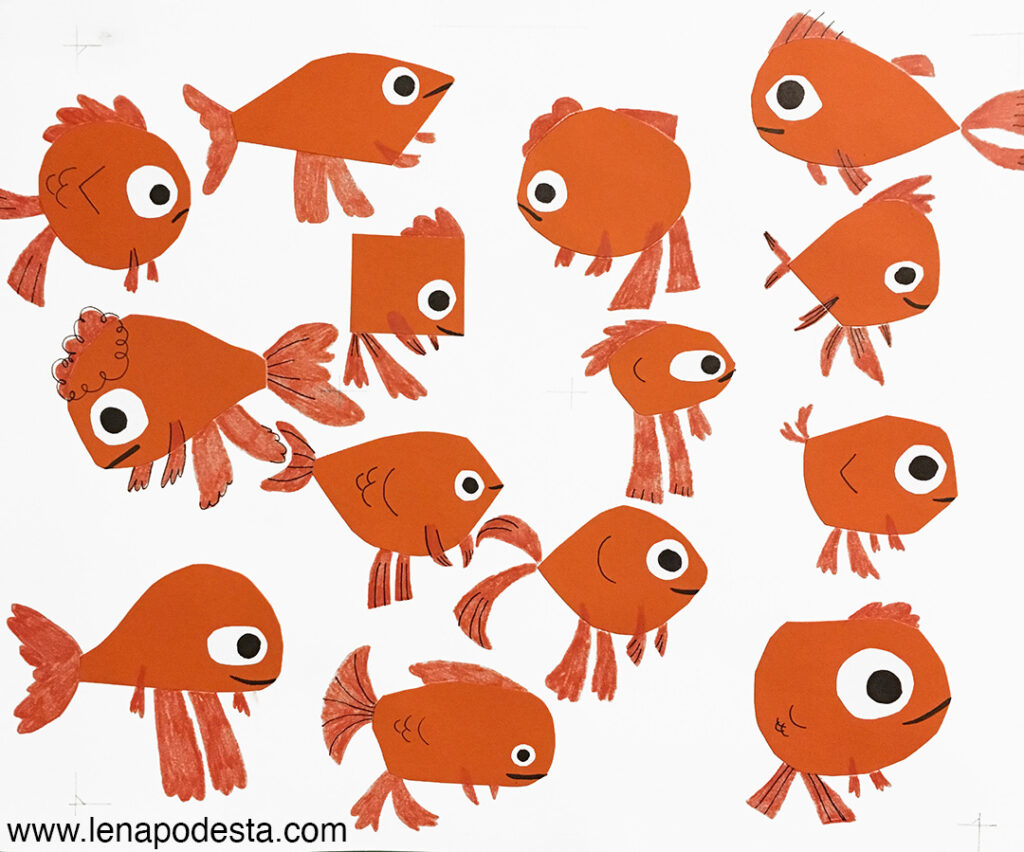
I love hirameki for character design: either making blobs with water color or cutting out random shapes from construction paper, then using a black marker to add in lines and turn those random shapes into character designs. It’s another way to trick your brain from focusing too much on the end product.
The only color I don’t like is beige.